Imagine a church where sixty thousand people are buried, walls that have endured seven centuries, and in between a landscape of discarded stuff. That's what Jesse Darling has laid out in the Old Church. Construction debris, worn-out chairs, broken electronics. Materials that normally disappear into a dumpster are here arranged as sculptures in one of the city's oldest buildings. It is not a provocation. Rather, it is a question: what do we keep, and why?
Darling, born in 1981 and living in Berlin, won the Turner Prize, Britain's most important art prize, in 2023. Godsworth is his first major solo exhibition in the Netherlands. He found some of the inspiration for the installation in the history of the church itself. Once there were nearly forty altars scattered throughout the building, each dedicated to a saint or guild. Those altars are long gone, but the places where they stood are still there. Darling plays with that: his sculptures inhabit the church in a similar way, as temporary shrines of everyday clutter.
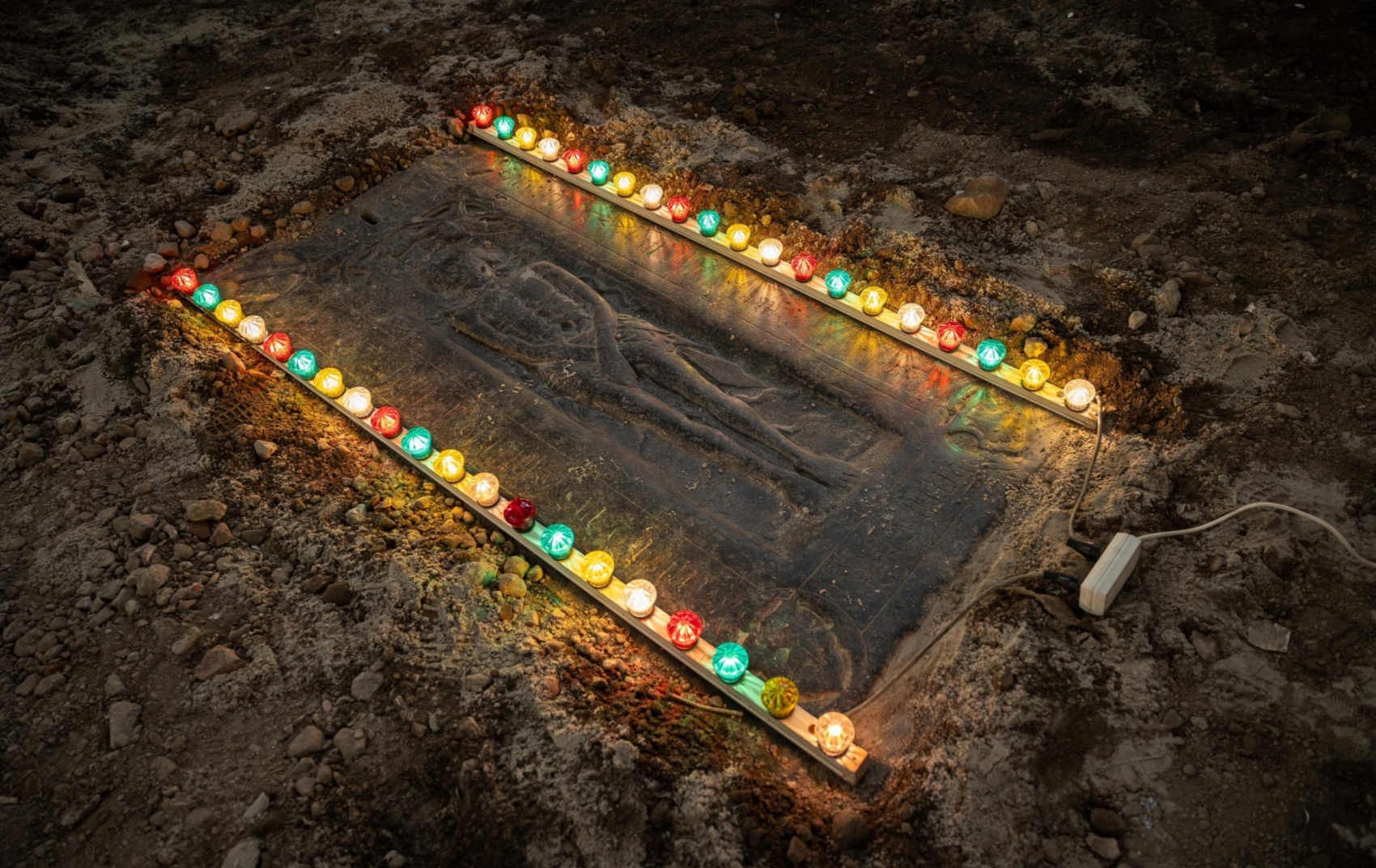
The church space has been completely transformed. The assemblages look makeshift, as if they were put together like this, but that feeling is misleading. The objects move between two worlds: they are at once relic and disposable object, carnivalesque figure and dilapidated case. Darling shows that beauty and decay need not be each other's opposites. That works especially well in this building, because the Old Church is itself just such a place: sacred and mundane at the same time, with tombstones as the floor and contemporary art on the walls.
The sculptures move among relics, carnivalesque figures and discarded trash, raising questions about what and who is considered valuable.
Godsworth is part of a three-year program in which Ammodo is supporting three solo exhibitions at the Old Church, between 2026 and 2028. The church as a stage for contemporary art is nothing new, but what Darling is doing here goes beyond showing art in a beautiful building. He makes the church participate. The sculptures move among relics, carnivalesque figures and discarded trash, raising questions about what and who is considered valuable. That's a question that hits particularly hard in this building, above two and a half thousand tombstones.