What remains when a father disappears from your life? The exhibition *O vader, kom huiswaarts / letter to a father* centers on that pressing question. The exhibition, on view in the Bagagehal at Loods6 on KNSM-laan, brings together various artists in a collective exploration of grief, memory, and personal identity. With this project, initiator Humyar Pourseyf has created a space where grief is not viewed as a completed process, but as an experience that continues to resonate. It is an invitation not to suppress loss, but rather to give it space through words, images, and silence.
What makes this exhibition special is the way art serves as a form of continuation. Here, loss is not an individual matter, but a layered dialogue among the bereaved. Personal memories are shared and, in the context of the Bagagehal, take on a broader, almost universal meaning. The loss of a father turns out to be a shared experience, regardless of one’s background or life path. This aligns with the current trend in the art world, in which intimacy and autobiography serve as a starting point to make themes such as mortality and connectedness tangible for the visitor.
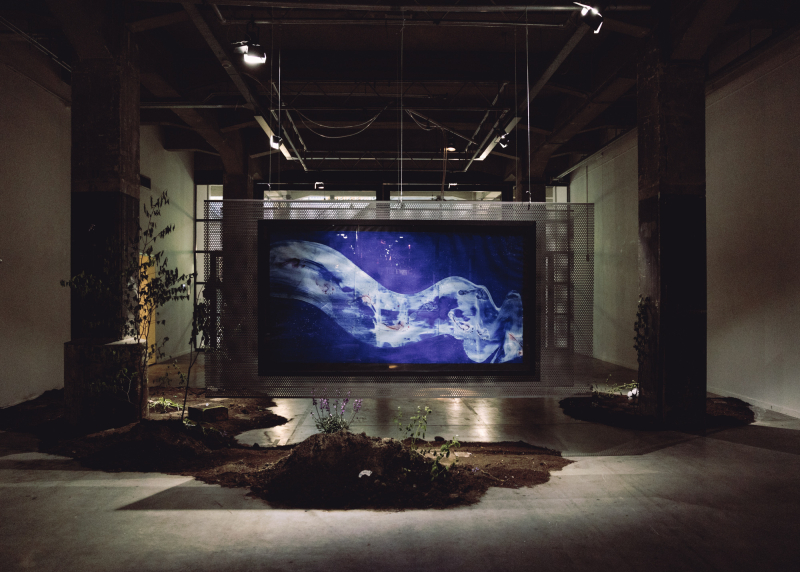
The role of silence in the exhibition is striking. Not as emptiness, but as a space in which meaning can emerge.
What a father leaves behind is often not concrete or clearly defined. It lies in small gestures, in the way he speaks, or in specific ways of looking at the world. *O vader, kom huiswaarts / letter to a father* makes this invisible legacy visible through photography and installations. The works show how a person’s identity is partly shaped by someone who is no longer here, transforming absence into a special form of presence. It touches on existential questions about what remains of us after death and how we live on in the stories of others.
The role of silence in the exhibition is striking. Not as a void, but as a space in which meaning can emerge. In that silence, emotions are given the chance to unfold—without explanation, without haste. Visitors are not forced to jump to conclusions, but are given the opportunity to reflect on their own loss and memories. It is precisely in this openness that the power of this poignant experience lies. The result is a vulnerable tribute to fathers and to everything that, despite death, remains forever connected to those left behind in the city.