What Tolhuistuin is
The venue is organized around a landmark 1920s building, the former offices of Shell. The main concert hall is called Paradiso Noord and seats 550 people standing. The balcony construction ensures that the space still feels compact even with 200 visitors. Paradiso is the regular programmer of that venue and handles much of the concert programming.
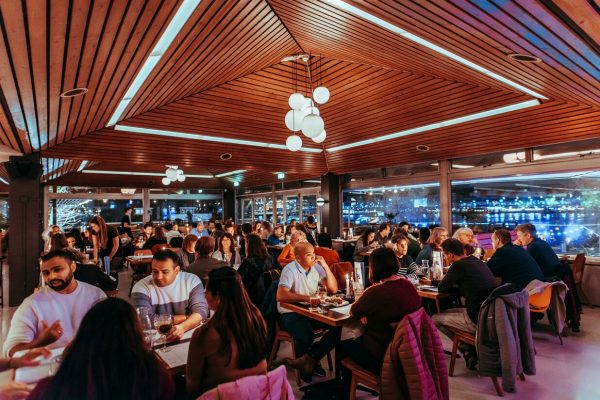
In addition to the concert hall, the pavilion has smaller spaces for theater, exhibitions and other activities. The site also includes a café-restaurant, a sun terrace on the IJ, exhibition spaces, a hip-hop school and a children's art room. The combination of functions on one site is characteristic: there may be workshops during the day, a concert in the evening, and a debate elsewhere on the site at the same time.
Programming: from Yumi Zouma to climate debate
Upcoming concert months include Yumi Zouma, SORRY and Fabiano do Nascimento on the agenda at Tolhuistuin. Paradiso programs a broad spectrum: from indie rock and singer-songwriters to electronic nights.
Programming ranges from intimate concerts with a few hundred people to themed festivals where art, music and social debate come together in the same venue - sometimes on the same day.
Tolhuistuin also organizes its own programming outside of concerts. The annual Warming Up Festival is the clearest example: a multi-day program of performances, music, theater, talk shows, podcasts and spoken word, focused on the climate crisis and how it affects art and society. This makes Tolhuistuin not only a concert venue but also a place where social themes are actively programmed.
New director and public art
Anne Schaepman has been director of Stichting Tolhuistuin since November 2024. She was born and raised in Amsterdam-Noord and was previously director of Stichting Amsterdam 750. She previously worked at Hermitage Amsterdam, Cinekid and World Press Photo, among others.
New art projects were recently added at the entrance to the site. Illustrator Jip van den Toorn created a mural at the North Entrance with the question, "How do you yourself think things are going?" Public art has thus become part of the public space around the complex, not just the program inside.