The imposing sculptures, some as tall as eight meters or as long as five meters, come from Dutch museums, private collections and public spaces. Visser worked with industrial materials such as iron, steel and concrete, which he transformed with a cutting torch and welding machine into powerful minimalist compositions. Whereas many international artists of the same period worked in a completely abstract manner, Visser's work always retained a reference to nature.
According to principal director Taco Dibbits are a wonderful complement to the sculptures Signal 1 and Signal 2, which have been on display in the Rijksmuseum Gardens for some time. Reflection and repetition play an important role in Visser's oeuvre, something that is evident in works such as Double Form 4, Two Birds and Big four.
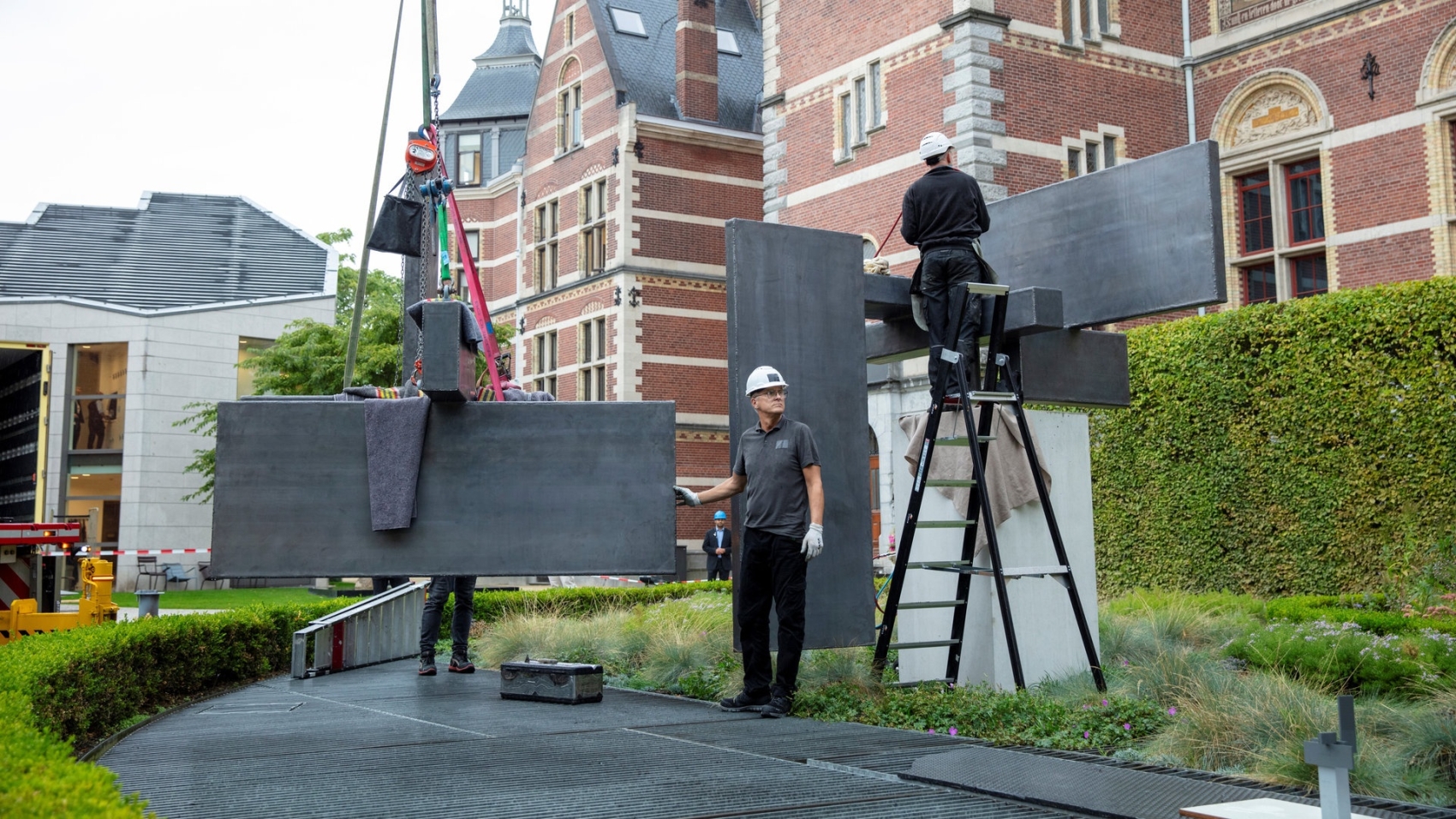
What makes this exhibition special is that three sculptures from public spaces are being shown together for the first time: Jacob's Ladder, More and Big four. Especially Jacob's Ladder makes an impression. The eight-meter-high work from 1954 consists of a cascading stack of black-painted steel crescent shapes and was originally made for the reconstruction event E55. Also More, inspired by the American reservoir Lake Powell, and Big four, for years a landmark in Amersfoort, will get a new context this summer among the greenery of the museum gardens.
“In Carel Visser's monumental sculptures, industrial power and natural stillness meet in a way that still feels surprisingly contemporary today.”
In addition, the sketch model of Flying fish on view, originally designed for Departure Hall 3 at Schiphol Airport. The colorful work hung there for years above the heads of travelers on steel cables.
With this exhibition, the Rijksmuseum is honoring an artist who had great influence not only nationally, but also internationally. Carel Visser's work is currently in collections of, among others Tate Modern and virtually all Dutch museums of modern art.