In a city where design manifests itself on every street corner, from architecture to fashion, sometimes it is precisely the most mundane object that makes the biggest impact. The red Dirk bag is the perfect example. Since its introduction in 2001, the bag has grown to become an indispensable part of the Dutch street scene. From students carrying their textbooks to families doing their weekly shopping - the bag is everywhere.
The strength of the Dirk bag is in its simplicity. The design is functional, recognizable and durable. Precisely this combination makes it a relevant design object, according to the Stedelijk Museum. The museum is known for its broad vision of design, focusing not only on exclusive pieces but also on products that play a role in everyday life.
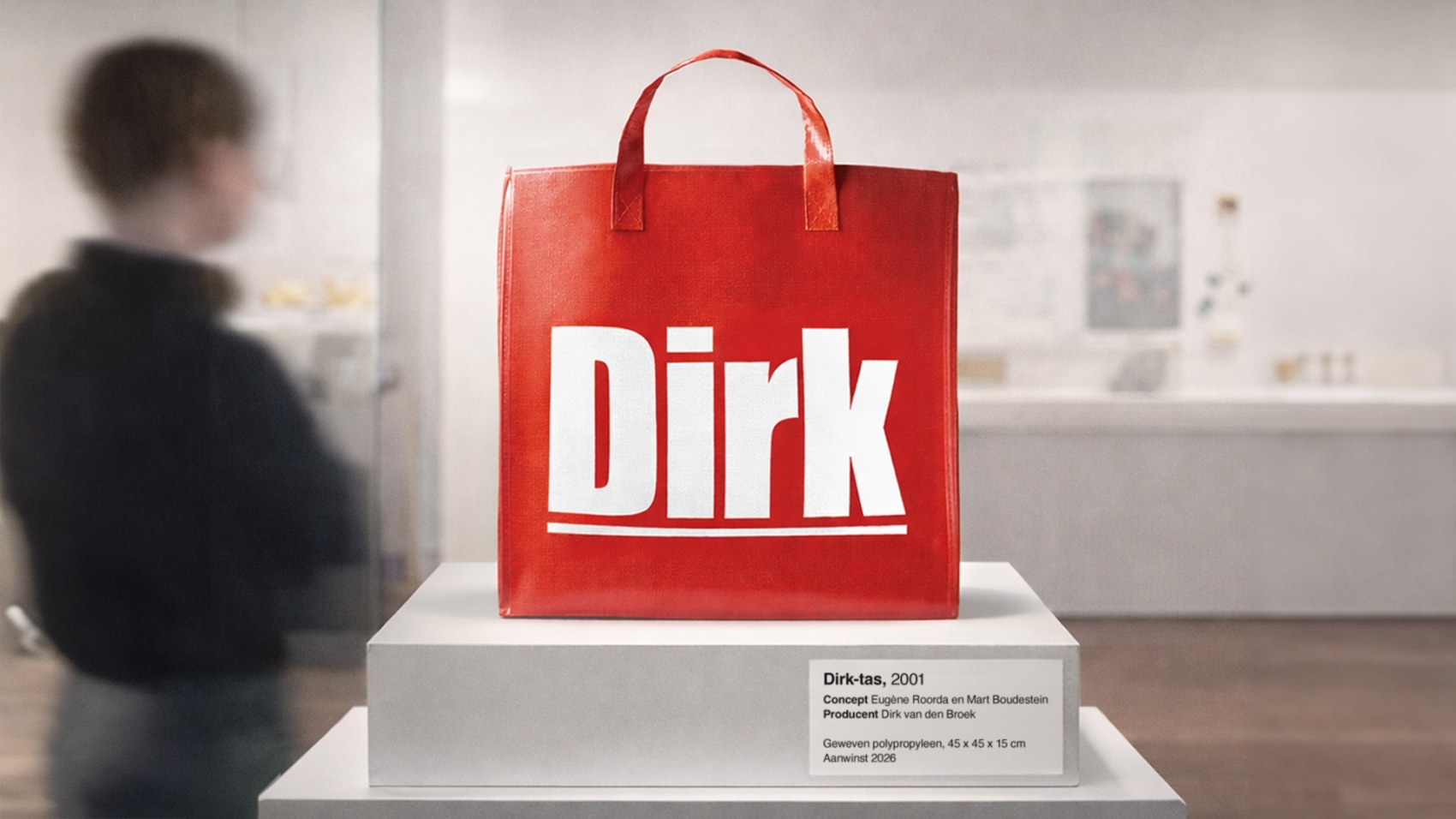
According to director Rein Wolfs, the inclusion shows that good design does not have to be elitist. On the contrary: products used by a wide audience are an important part of our visual culture. The Dirk bag proves that design can be accessible without losing power.
“Real design is not only recognized in museums, but especially in what people carry with them every day.”
Also notable is the cultural crossover the bag has made. Where it was once purely functional, it later appeared on the catwalk of Amsterdam Fashion Week and was embraced as an unexpected fashion item. As such, the bag moves effortlessly between different worlds: from supermarket to fashion and now museum.
For Dirk himself, the inclusion feels like special recognition. General manager Marcel Huizing emphasizes that the bag's success stems precisely from its simplicity and recognizability. What began as a practical tool grew into a national icon.
With the addition of the Dirk bag to the collection, the Stedelijk Museum underscores an important message: design is not just in showcases; it lives on the streets, in people's hands, every day.