At Tewatashi, you don't come in to choose from a long menu. You sit down at the counter, watch as each course is constructed, and let the menu do the work. The setting is intentionally small and quiet: minimalist, serene, and so close to the chef that you automatically notice how much is happening before something hits your plate.
The basis is omakase with seasonal produce. That means: no set repetition, but a clear line. You get a carefully constructed series of Japanese dishes and nigiri, with Edomae techniques reflected in how fish is prepared and served. Not "show," but precision: cutting, temperature, maturation and timing. This is precisely why it feels personal, even without becoming a talkative evening.
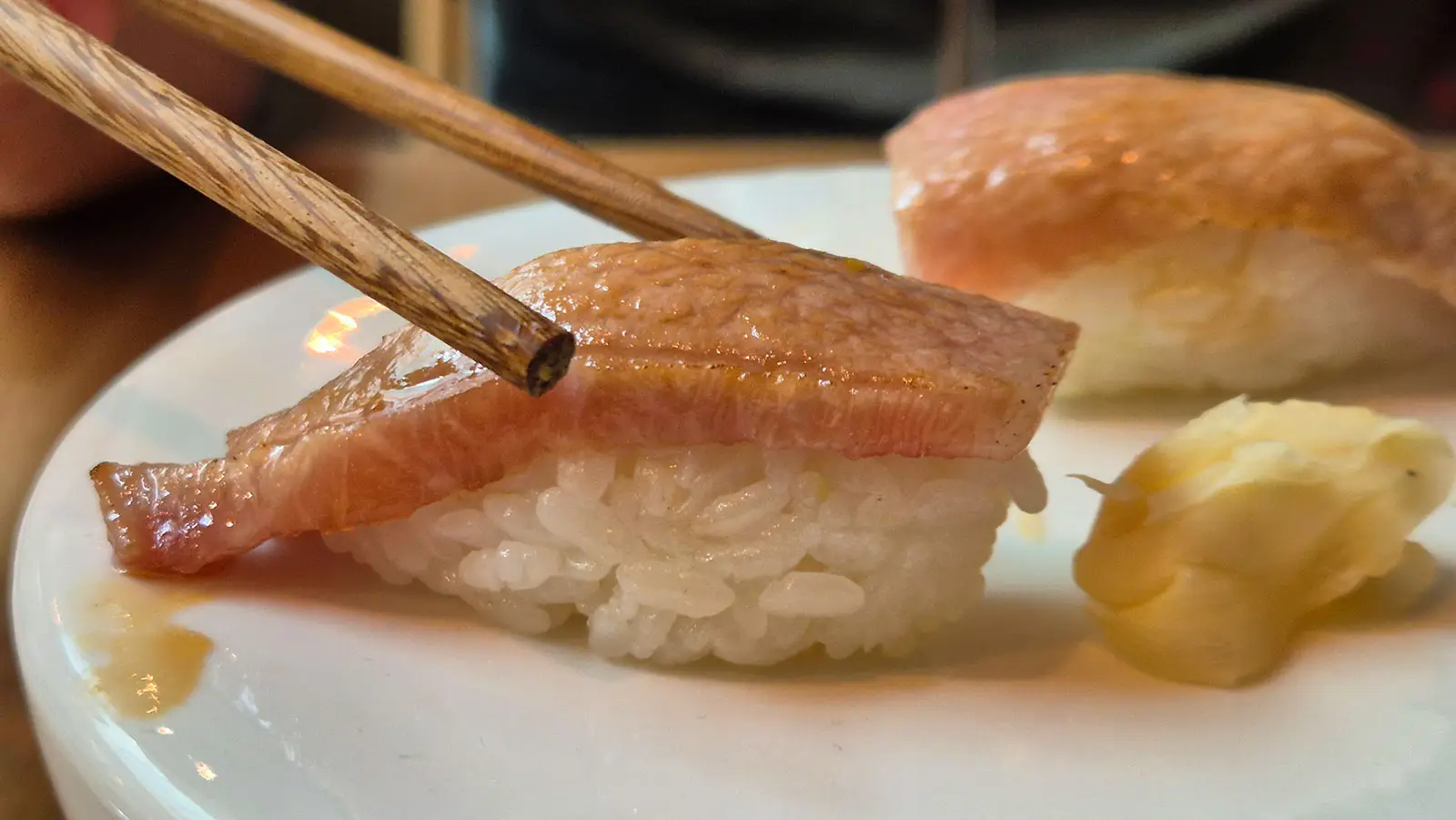
Moreover, Tewatashi is not a one-man act. The official team structure employs a set division of roles: a sushi chef who carries the Edomae line, a sake sommelier/manager who oversees pairing and service, and a tea master who puts the tea part down in earnest. The interior is also deliberately designed as part of the experience: few distractions, lots of focus.
You quickly notice here that "simple" is not the same as "easy"-everything is precisely tuned.
What makes it interesting for De Pijp is that it doesn't try to be a busy "come-for-the-hype" place. Rather, it's a resting point among the hustle and bustle: you sit quietly, you watch, you eat, and at the end you feel like you've really been guided through something. If you like omakase, this is a place that works mostly on detail: you taste seasonal changes, you see technique, and you're close enough to the proceedings to understand it without explanation.