Not every café that calls itself brown is really brown. The best are those where little has changed in decades, where regulars set the tone and tourists are allowed to tag along. Here's a selection, from the Jordaan to the Plantage, that still know what it's all about.
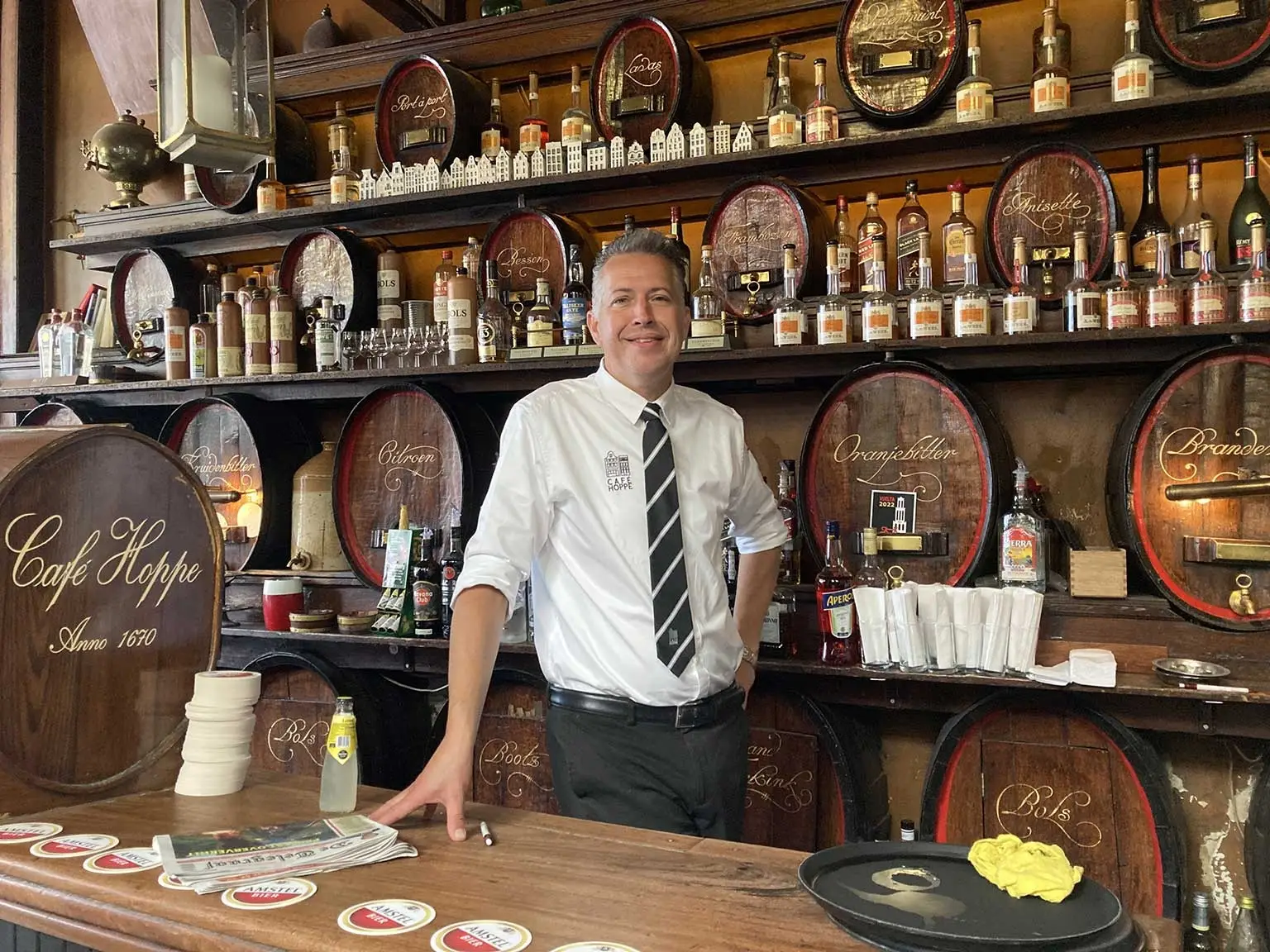
Café Hoppe
Hoppe has been around since 1670 and is the city's most talked-about brown café. Divided into two buildings on the Spui: Sta-Hoppe for regulars and young Amsterdamers, Zit-Hoppe for those staying longer. The floor is full of sawdust as it should be. Hans van Mierlo laid the foundation for D66 here, Freddy Heineken liked to have a drink there. On Friday afternoons there is always a crowd outside with a glass in hand. - Spui 18-20, Center
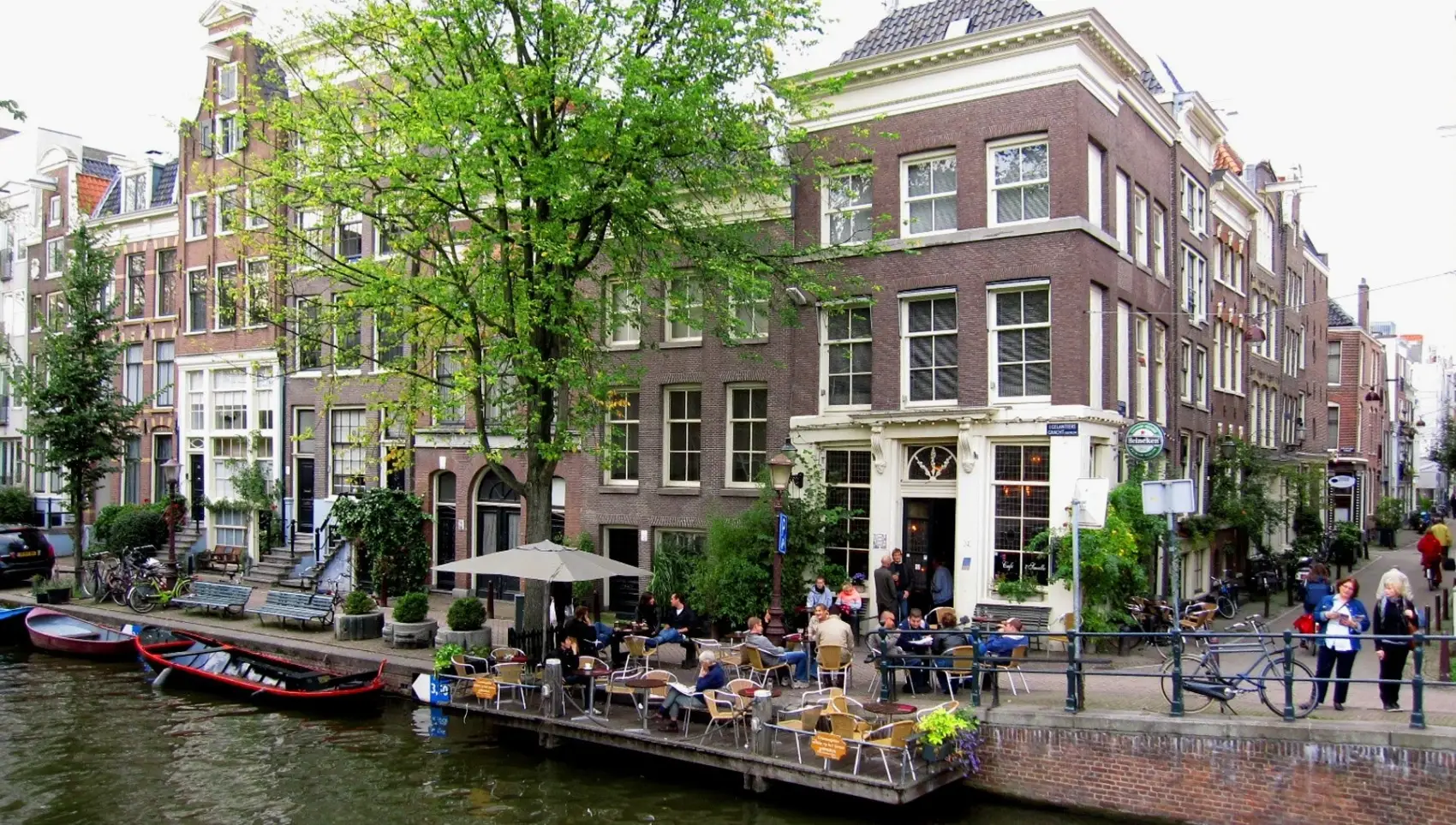
Cafe ’t Smalle
’t Smalle dates back to 1780, when Pieter Hoppe started a wine trade and distillery here. The small tasting room became a café and remained one of the nicest spots in the Jordaan. Terrace on Egelantiersgracht, low ceiling, dark wood, friendly staff. Not busy on weekday afternoons, exactly the reason to go there then. - Egelantiersgracht 12, Jordaan
“Café Hoppe has something unique, something that is hard to describe, but that captures the imagination of many. Young and old keep coming back here.” - Pepijn Zonneveld, owner Café Hoppe (De CaféKrant, 2023)
Café ’t Papeneiland
The building dates from 1622 and is a national monument. Delft blue tiles, fireplace, freshly baked apple pie. In the basement you can see the remains of an escape passage to the Catholic hiding church on Prinsengracht 7 that used to be next door. Bill Clinton ate apple pie here during his visit to Amsterdam. The owner knew an hour in advance that he was coming. - Prinsengracht 2, Jordaan
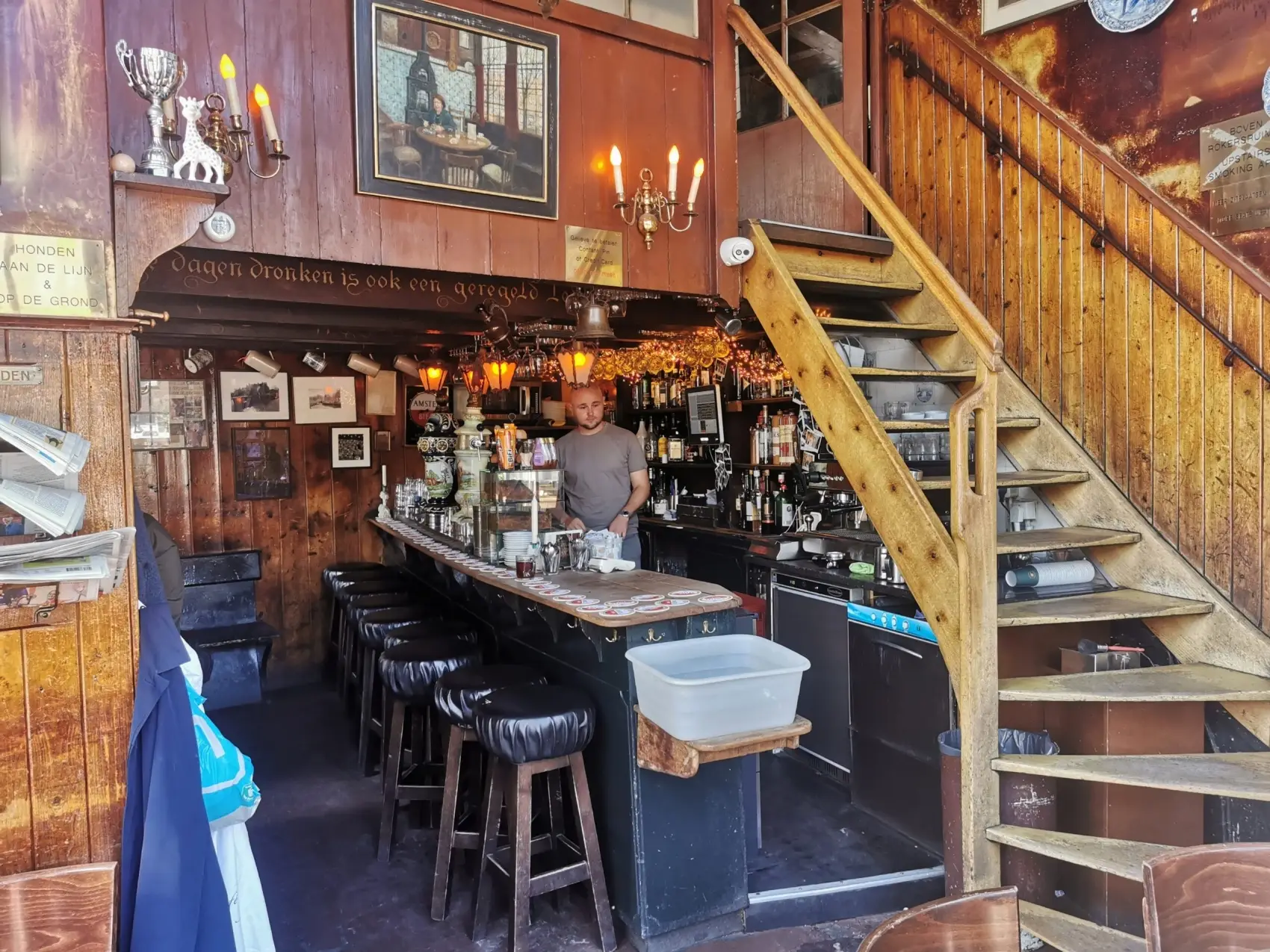
Cafe Pieper
Café Pieper has been around since 1665 and sits on the corner of Prinsengracht and Leidsegracht. Stained glass windows, low ceiling, worn wooden floor. Two authentic poles supporting the building are visible in the middle of the store, traces of former oil lamps can be seen in the ceiling. Rob de Nijs wrote a song about this café. Father and son run the business. Lawyers and artists from theaters in the area like to drop in. - Prinsengracht 424, Grachtengordel
“In the Jordaan, large families used to live in small houses. People met in the cafes, where the Jordanian song of life was sung over a drink.” - Amsterdam Oude Stad (amsterdamoudestad.nl, 2024)
Cafe the Sluyswacht
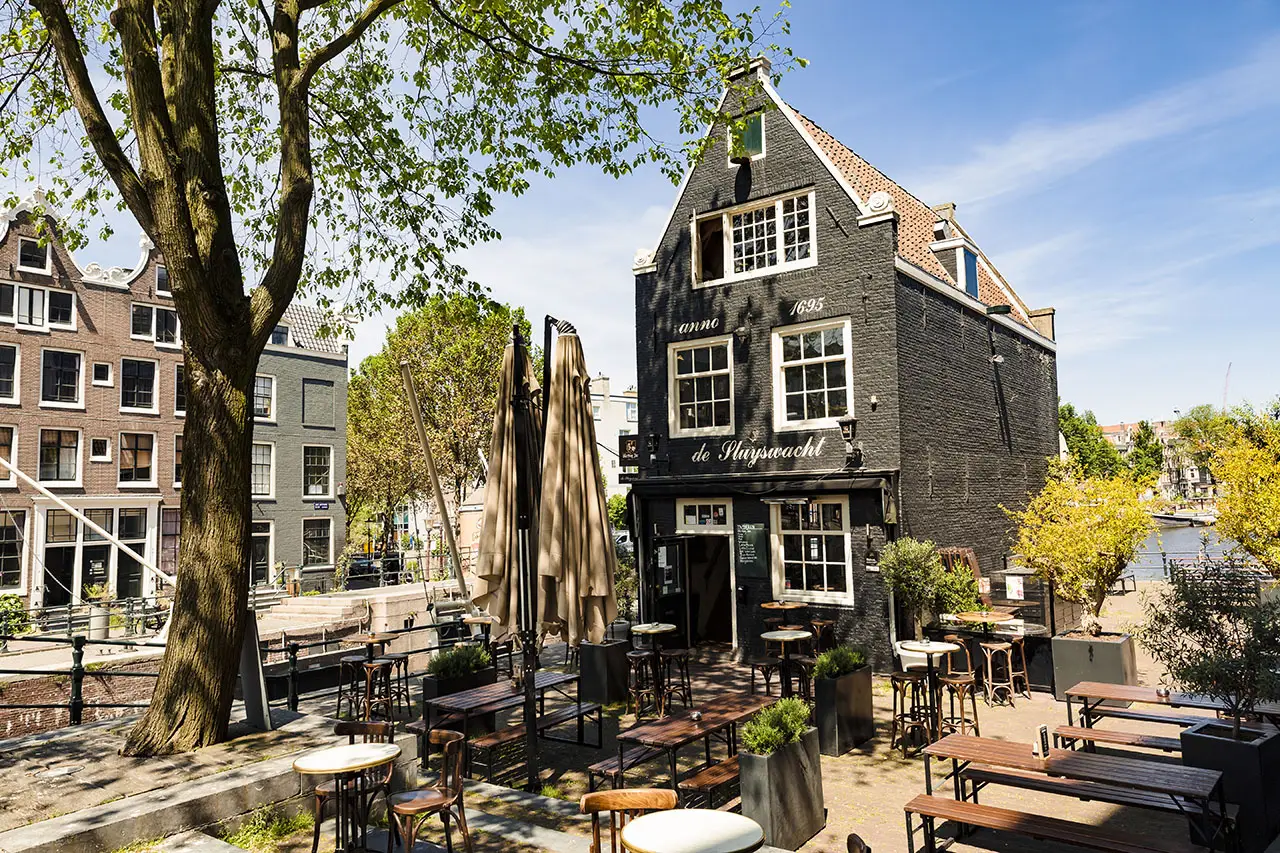
The Sluyswacht was built in 1695 as a residence for the lockkeeper of the adjacent St. Anthony Lock. It is crooked, is a protected national monument and has a terrace overlooking the Oude Schans and the Montelbaan tower. Rembrandt once drew the lock this café overlooks from his house across the street, now the Rembrandt House. Small and dark inside, one of the city's finest terrace views outside. - Jodenbreestraat 1, Center
Cafe the Doctor
De Dokter is Amsterdam's smallest café: eighteen square meters. Founded in 1798 by a surgeon from the adjacent Binnengasthuis, owned by the same family ever since. Antique clocks, cages, chandeliers and a few tables. Over a hundred whiskeys, good gin, soft jazz in the background. Open Wednesday to Saturday; come early if you're with a group. - Rozenboomsteeg 4, Center
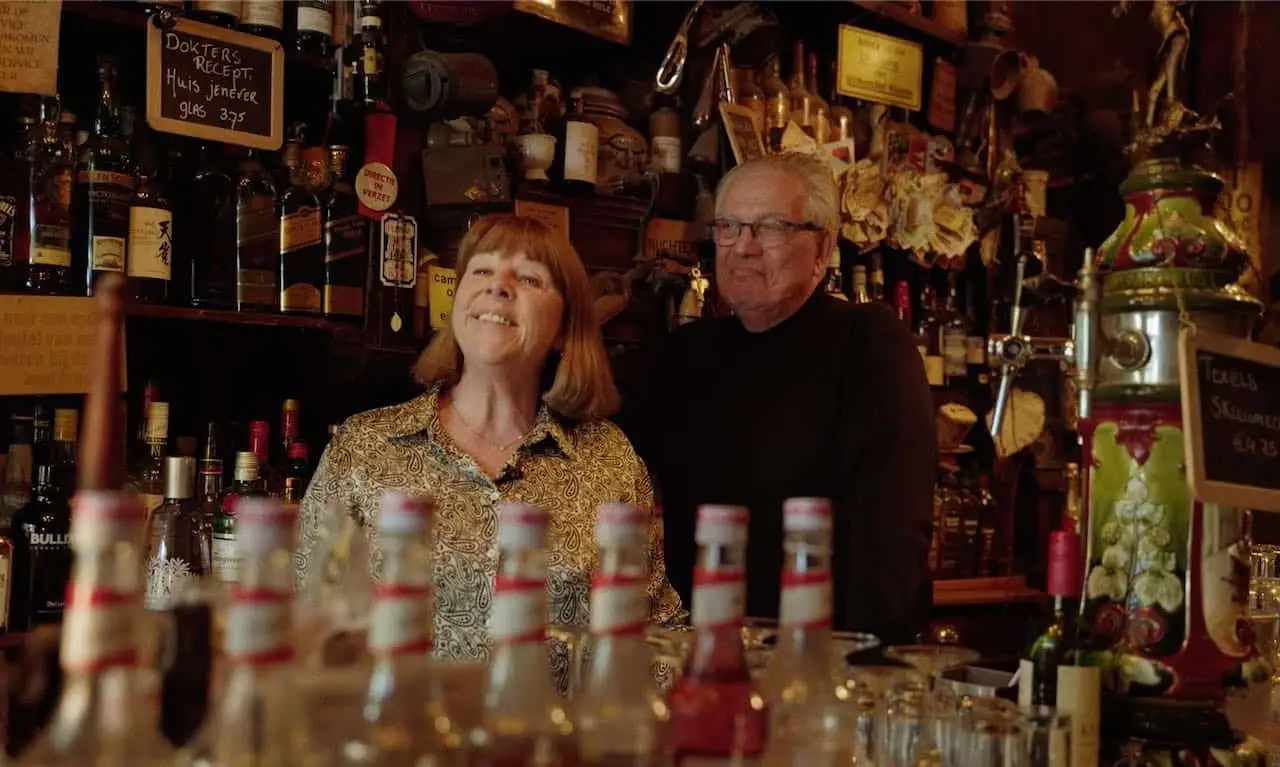
“Café De Dokter was opened on Sept. 2, 1798, by a surgeon from the Binnengasthuis. This traditional brown café has hardly changed since then.” - Difford's Guide
Cafe Lowietje
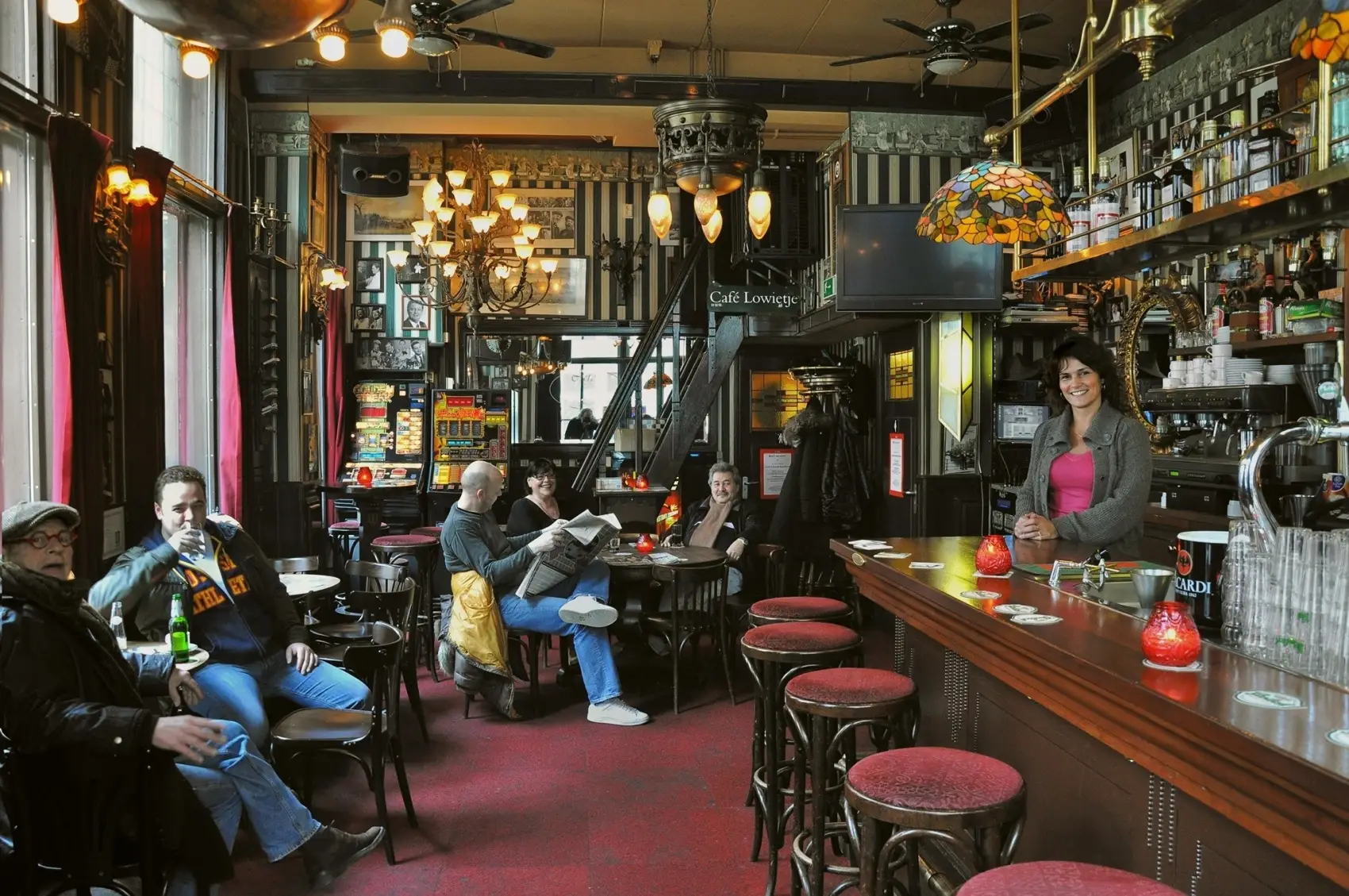
Lowietje opened in 1954 and is known in the Jordaan as the regular pub of the TV series Baantjer. The stools on which detectives Vledder and De Cock sat are still in the same spot. Music by Tante Leen, Johnny Jordaan and Willy Alberti, complemented by new Amsterdam artists performing live on weekends. A place for early market vendors, for live music nights and for everyone in between. - Third Goudsbloemdwarsstraat 2, Jordaan
Festina Spring
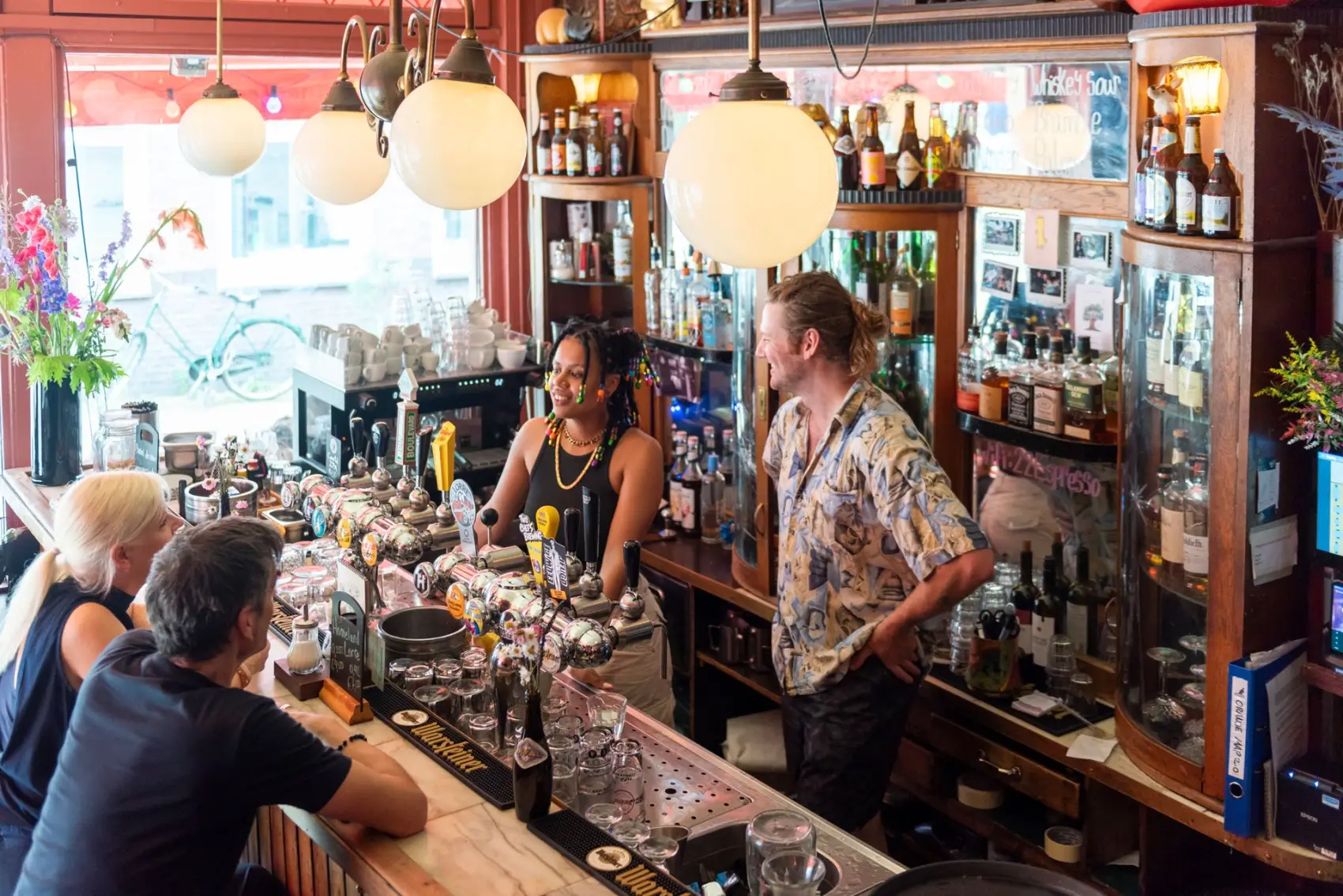
Festina Lente has been around for more than 25 years and sits on Looiersgracht, within walking distance of Nine Streets. On the terrace is Albert Zweep's bronze sculpture The Regular Customer, made as payment for a past due bill. Every first Monday night of the month there is the Poetry Battle, Amsterdam's perennial poetry venue for more than 25 years. Also pub quiz, special beers on tap and an extensive kitchen. The brown café as a living room, that's the idea here. - Looiersgracht 40B, Jordaan
“Originally built as a residence for the lockkeeper. Today, the charming, leaning building is protected as a national monument.” - Café de Sluyswacht, own description (sluyswacht.nl, 2025)
The Heron
The Heron on New Lily Street is more eatery than pub, but deserves a spot on this list because of its interior and tone. Dark wood, art deco accents, wooden floor that creaks. Run since 2025 by the people behind Entrepot and De Druif. The cuisine makes up for classics: spare ribs, steak, seasonal soup. Make reservations for dinner; no reservations are required for drinks at the bar. - Nieuwe Leliestraat 34, Jordaan
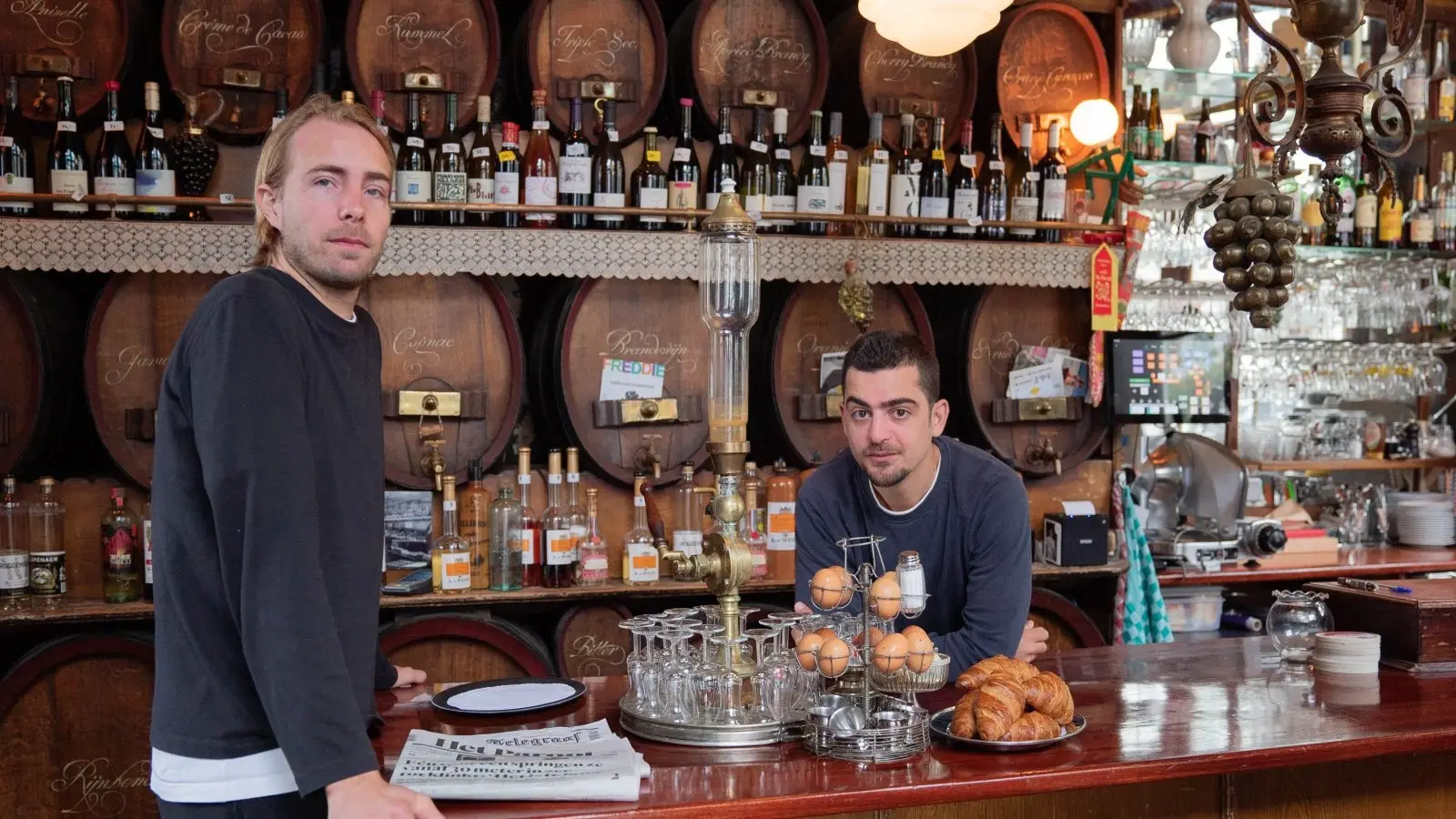
“Eatery De Reiger is still that neighborhood café where you can easily step in for a good plate of food and a pleasant glass of wine.” - Broersma Working & Living (brothersma.com, 2025)
Café Gruter
Karel Gruter bought the café in 1951 and decorated it to his own taste. Since then, little has changed. Right in the middle of Oud-Zuid, between the Vondelpark and the Concertgebouw, but has remained accessible. Real estate agents, lawyers, journalists and local residents drop in here during the week. The Thursday and Friday drinks with bitterballen and ox sausage are a household name in the neighborhood. Large sunny terrace, specialty beers on tap. - Willemsparkweg 73-75, Museum Quarter
Café Oak and Lime
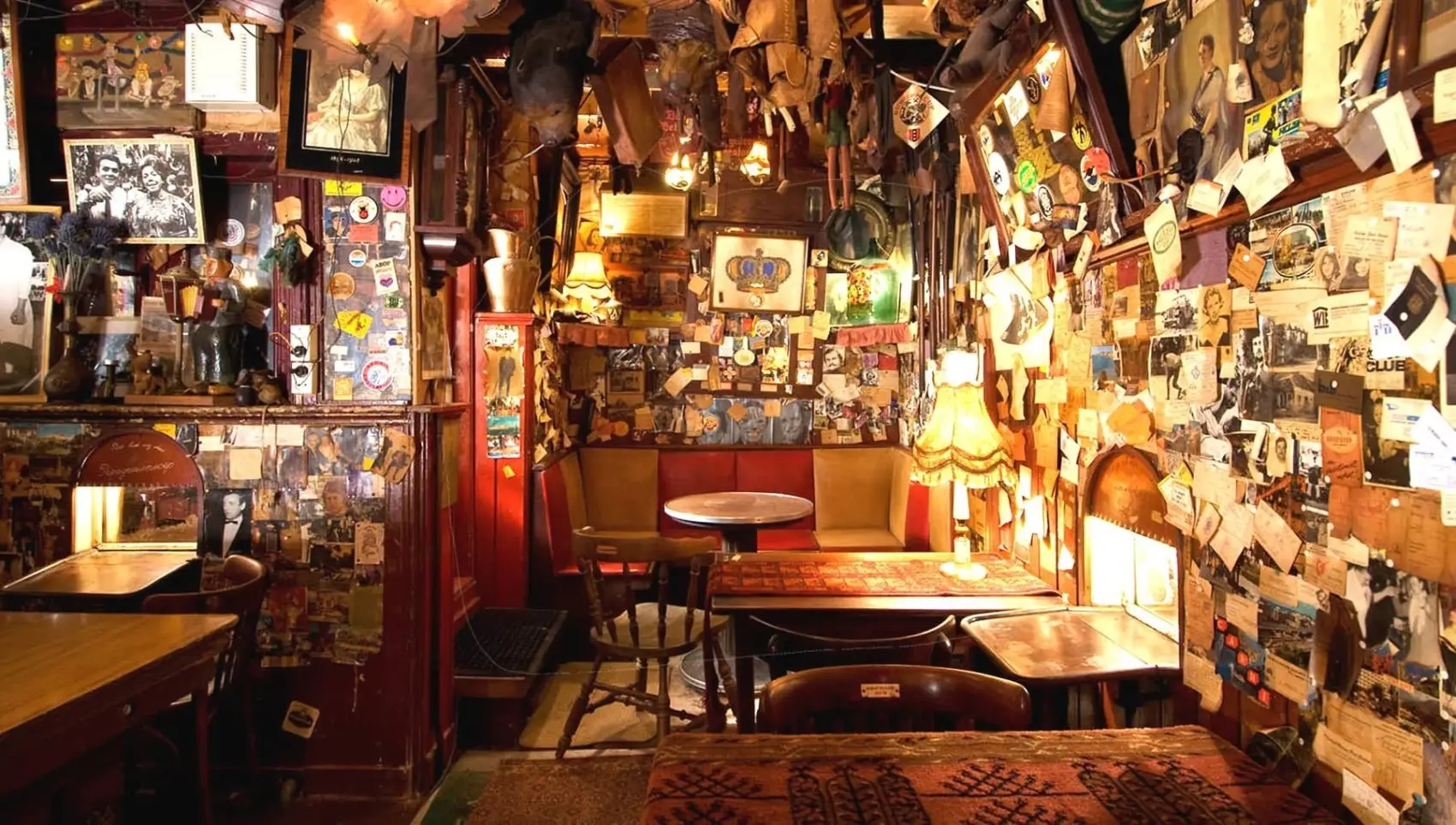
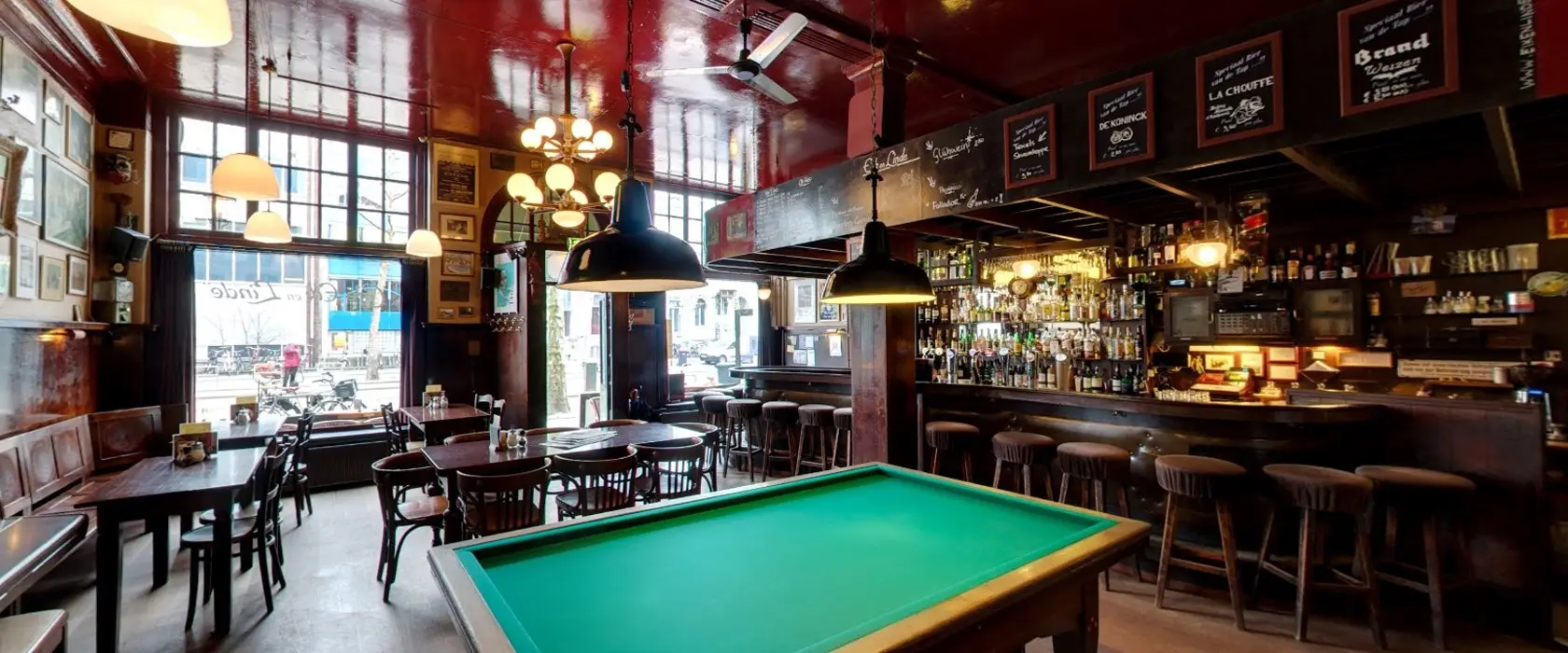
Eik en Linde has been on Plantage Middenlaan for decades and is the pub for the neighborhood around Artis. Mixed crowd: regulars, billiards players, students from the UvA. The pub owes its fame in part to the radio programs that used to be recorded in the upstairs room, including Ischa Meijer's famous program. Good beer, large room, terrace under the lime trees in summer. - Plantation Middenlaan 22, Plantation
Cafe the Two Swans
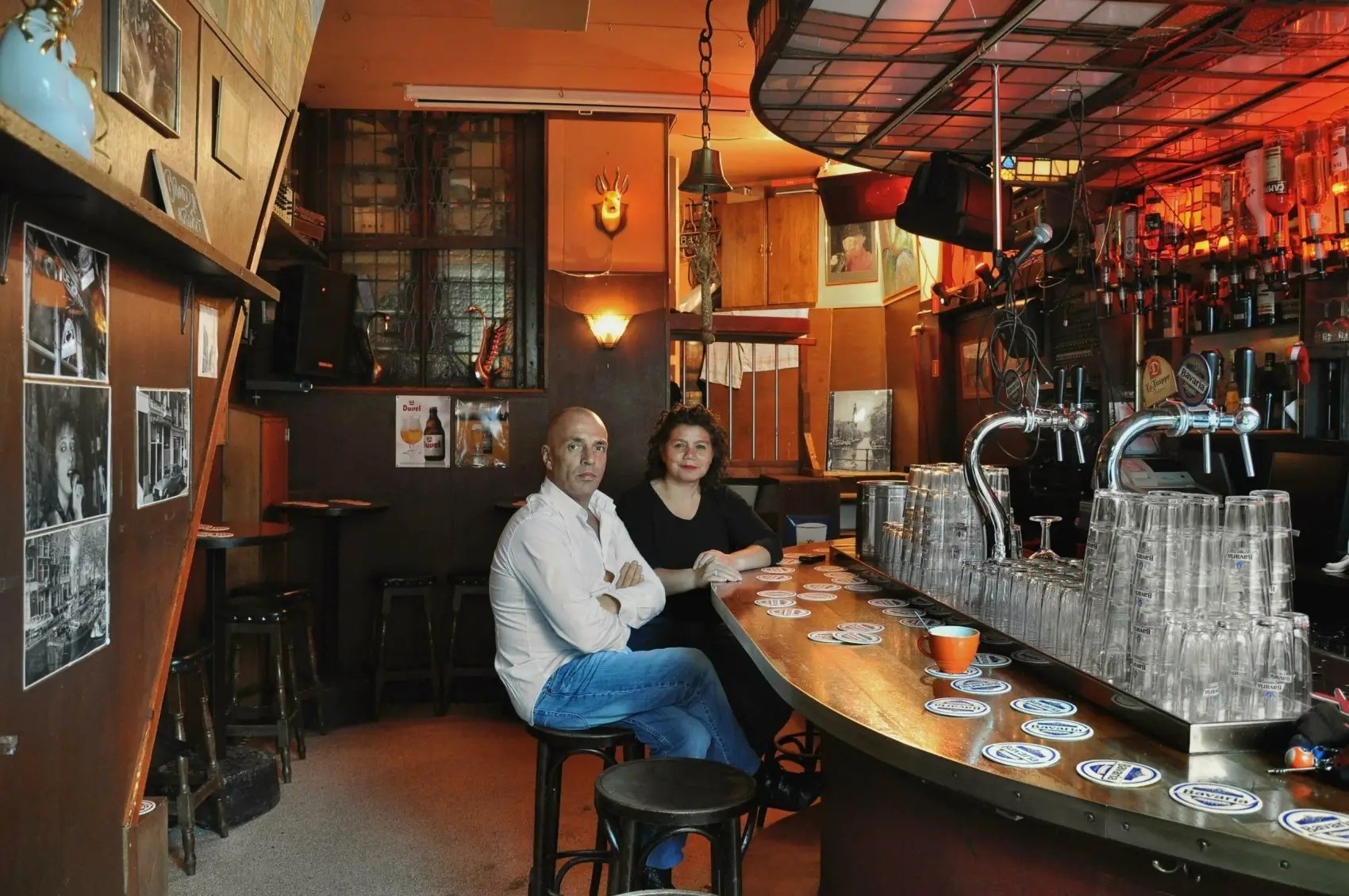
De Twee Zwaantjes is a compact, hundred-year-old pub on Prinsengracht. Every week, regular musicians come to play and guests sing along. No concert but pub music as it always was in the Jordaan. Intimate, approachable, authentic. - Prinsengracht 114, Jordaan
“In 1951 Karel Gruter took over this café and decorated it to his own taste. Since then, very little has changed about the interior. A real brown café: authentic and timeless.” - Cafe Gruter, own description (cafegruter.com, 2024)
Cafe Hesp
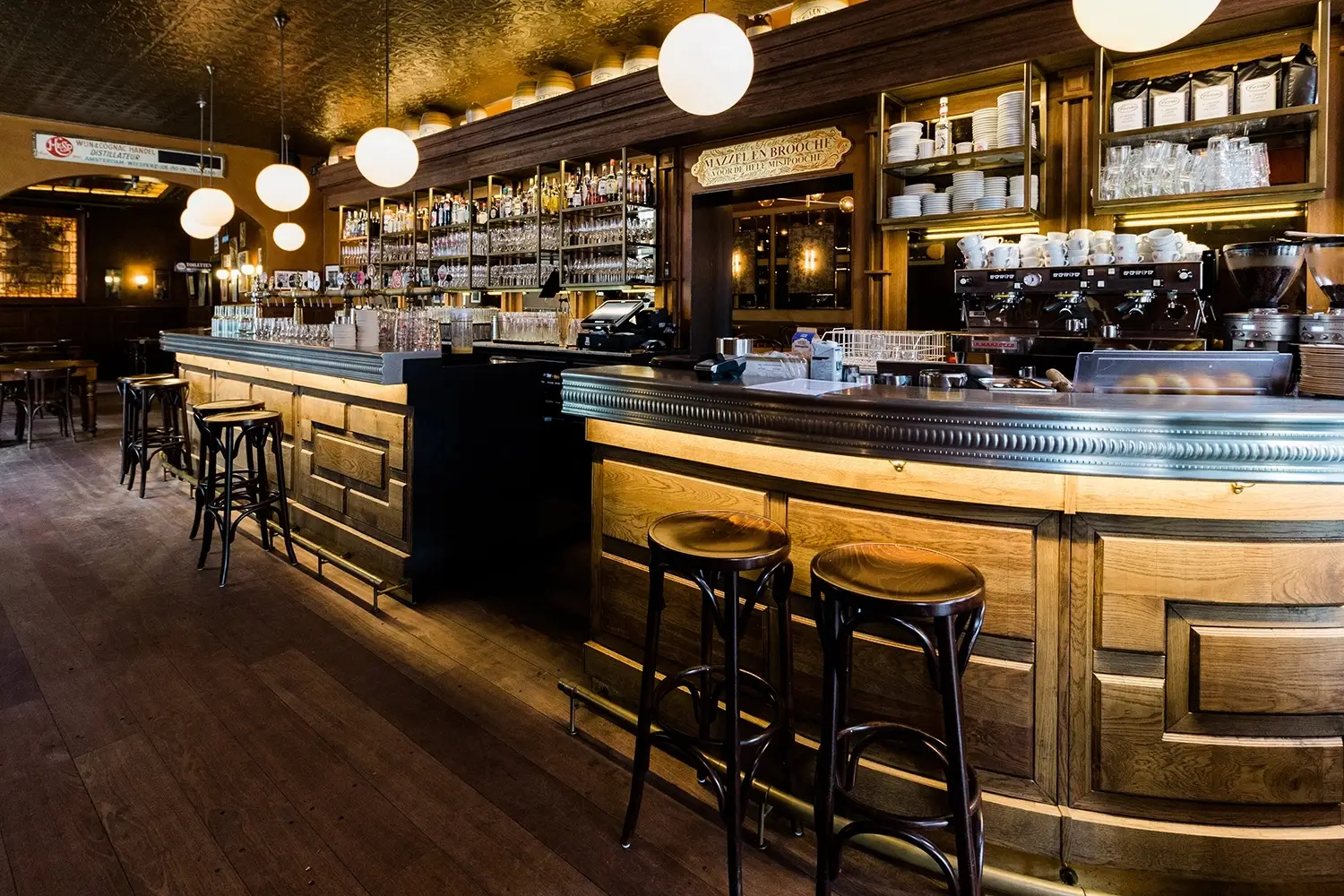
Hesp stands on the banks of the Amstel River and has been around since 1890. The brown interior is intact, the terrace looks straight at the water. During the day a quiet place for coffee or lunch, at night full of local residents. Young crowd now, but the atmosphere of the neighborhood pub has remained. One of the few real brown pubs in Oost with a waterfront terrace. - Weesperzijde 130-131, Weesperzijde
Cafe ’t Sluisje
’t Sluisje sits in a 1565 building on Nieuwendammerdijk, one of Amsterdam's oldest inhabited dikes. For years run by the De Ruijter family; in 2017, 85 local residents bought the café together for ninety thousand euros to preserve it. The atmosphere has remained unchanged. Famous for its freshly baked apple pie and homemade soups. The terrace by the lock is one of the quietest spots in town. - Nieuwendammerdijk 297, Nieuwendam
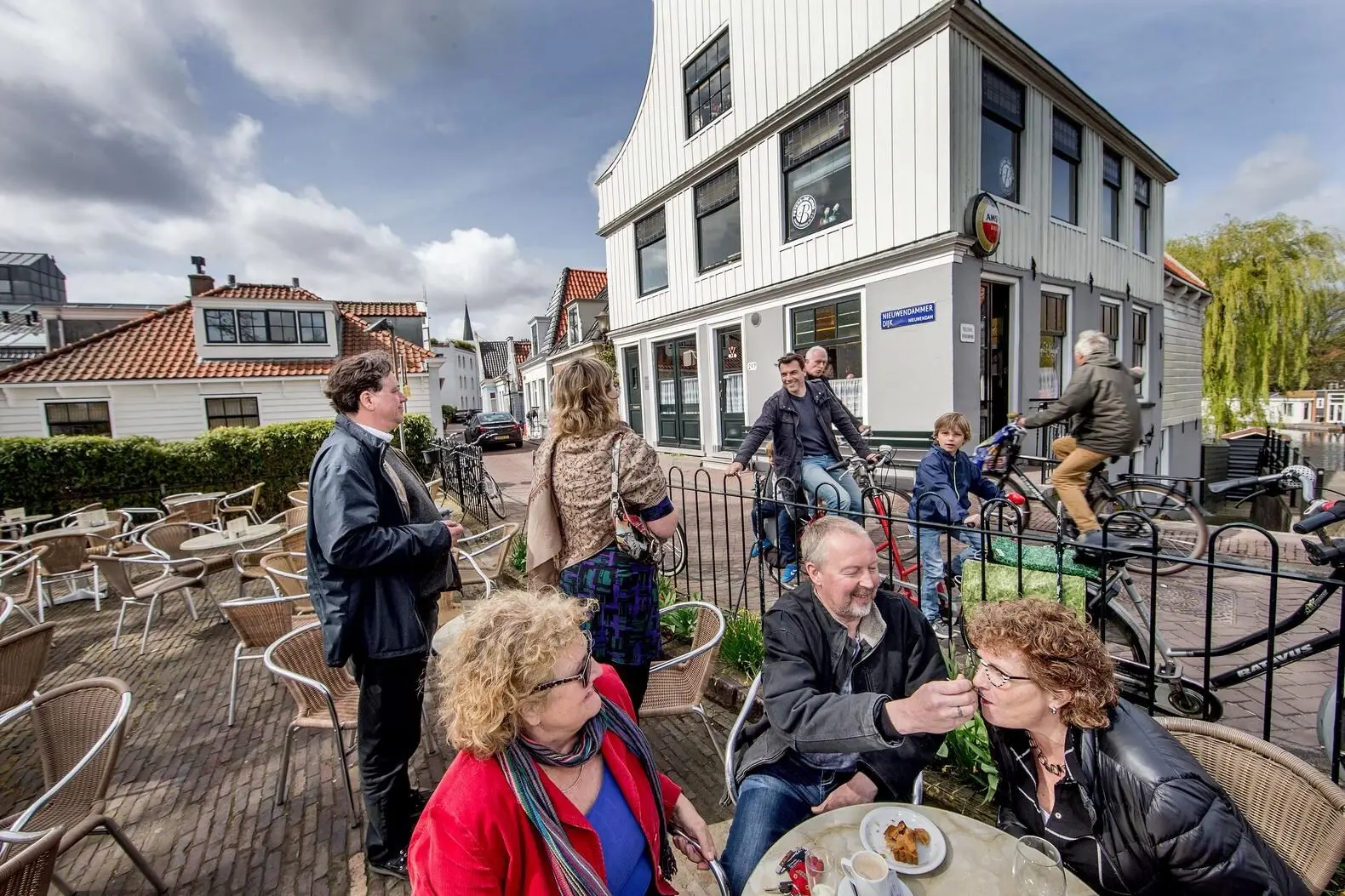
“Café ’t Sluisje is one of the most famous pubs in Amsterdam-North and is frequented by local residents all year round.” - iamsterdam.com
The brown pub does not survive on nostalgia alone. The best ones on this list still draw a steady neighborhood crowd, have character of their own and make you feel like you're getting somewhere. A tour of the Jordaan begins at Chris or ’t Smalle, ends at Lowietje or Festina Lente, and in between are hours of time well spent.